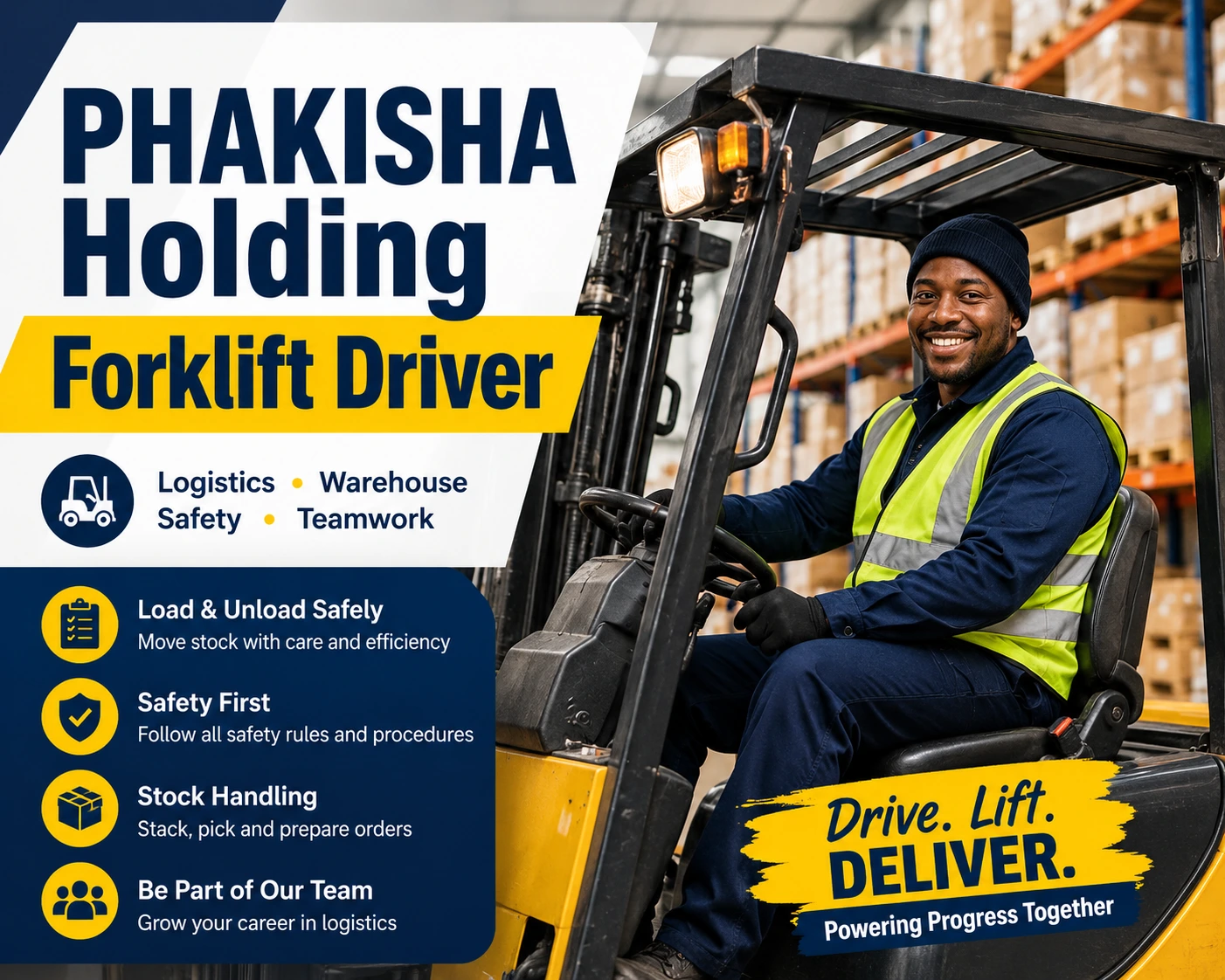
Learn about the PHAKISHA Holding Forklift Driver opportunity in Gauteng, including forklift duties, warehouse responsibilities, safety requirements, and logistics career insights.
Warehouse and logistics jobs continue to play a major role in South Africa’s growing supply chain industry. As distribution centres, cold storage facilities, and transport operations expand, skilled forklift operators remain in high demand. One of the latest opportunities attracting attention is the PHAKISHA Holding Forklift Driver position available in Gauteng’s eastern suburbs, including Alrode, Katlehong, and Thokoza.
For many job seekers, forklift driving may appear straightforward at first glance. However, modern warehouse operations require far more than simply moving pallets from one place to another. Employers now look for operators who understand safety procedures, inventory handling, equipment inspections, and efficient warehouse workflows.
The PHAKISHA Holding Forklift Driver opportunity highlights how logistics companies value trained operators who can work safely under pressure while supporting fast-moving warehouse environments. Understanding what this role involves can help applicants prepare properly and improve their long-term career opportunities in the warehouse and logistics industry.
What You Should Know First
The PHAKISHA Holding Forklift Driver opportunity is a contractor position within the logistics and warehouse sector in Gauteng. Applicants need a valid forklift or reach truck licence, warehouse experience, and the ability to work shifts, weekends, and physically demanding environments.
The role mainly focuses on:
- Loading and unloading trucks safely
- Moving stock within warehouses
- Operating forklifts and reach trucks
- Supporting warehouse inventory systems
- Following workplace safety procedures
- Working in warehouse or cold storage environments
Applicants also need Grade 12, basic stock-handling skills, physical fitness, and attention to detail.
Understanding the PHAKISHA Holding Forklift Driver Role
The logistics industry depends heavily on efficient warehouse movement. Forklift operators help ensure products move safely between receiving areas, storage sections, production spaces, and dispatch zones.
Without skilled forklift operators:
- Deliveries slow down
- Warehouses become disorganised
- Products get damaged
- Workplace accidents increase
- Supply chains face delays
This is why warehouse employers place strong emphasis on safety awareness, equipment handling, and operational discipline.
The PHAKISHA Holding Forklift Driver role is designed for individuals who can operate material-handling equipment safely while supporting warehouse productivity.
Why Forklift Operators Are Important in Logistics
Warehouses are busy environments where large volumes of stock move continuously throughout the day. Forklift operators help manage this movement efficiently.
Supporting Fast Warehouse Operations
Modern warehouses rely on speed and organisation.
Forklift operators assist by:
- Transporting goods quickly
- Reducing manual handling
- Organising storage spaces
- Preparing stock for dispatch
- Assisting production operations
For example, in a cold storage facility, products may need to move rapidly between loading bays and refrigerated storage to maintain product quality.
Efficient forklift operation helps prevent delays and spoilage.
Main Duties Explained Step by Step
The job description includes several responsibilities that are essential in warehouse operations.
Loading and Unloading Trucks Safely
One of the primary responsibilities is handling incoming and outgoing deliveries.
This involves:
- Lifting pallets carefully
- Positioning loads securely
- Avoiding product damage
- Following loading procedures
- Maintaining balance during transport
Improper loading can create serious safety risks, especially when handling heavy or unstable products.
Operators must remain alert at all times.
Moving Stock Around the Warehouse
Warehouse organisation depends heavily on proper stock movement.
Forklift operators may transport:
- Raw materials
- Finished goods
- Bulk inventory
- Packaging supplies
- Dispatch orders
Operators need to understand warehouse layouts and follow designated movement routes to avoid collisions or confusion.
Stacking Products in Storage Racks
Warehouses often use high storage racks to maximise space.
This responsibility requires operators to:
- Lift products to elevated positions
- Align pallets correctly
- Avoid damaging shelves
- Maintain load stability
Reach truck experience becomes especially valuable in facilities with narrow aisles and high shelving systems.
Transporting Materials to Production Areas
Some warehouse operations support manufacturing or processing activities.
Forklift operators may move:
- Raw materials to production lines
- Packaging supplies
- Finished goods for storage
This helps maintain workflow efficiency throughout the facility.
Understanding Warehouse Inventory Responsibilities
The role also includes stock and inventory-related tasks.
Checking Stock Quantities
Operators may assist with inventory tracking by:
- Counting pallets
- Verifying stock movement
- Reporting shortages
- Updating warehouse systems
Accurate stock handling reduces inventory errors and helps businesses manage supply effectively.
Picking and Preparing Orders
Warehouse dispatch operations rely on accurate order preparation.
Forklift operators may help:
- Pick stock from storage locations
- Assemble dispatch orders
- Move products to loading zones
- Ensure orders match documentation
Mistakes during order preparation can result in customer complaints or delivery delays.
Why Forklift Inspections Matter
The opportunity specifically mentions forklift inspections before and after shifts.
What Operators Check During Inspections
Forklift inspections usually include:
- Tyres
- Brakes
- Forks
- Steering
- Warning lights
- Fluid levels
- Battery or fuel systems
These inspections help identify problems before equipment becomes dangerous.
For example, damaged forklift forks can fail while lifting heavy stock, creating serious safety hazards.
Reporting Mechanical Problems
Operators are also expected to report faults immediately.
Ignoring equipment issues can lead to:
- Workplace accidents
- Product damage
- Operational delays
- Expensive repairs
Responsible reporting protects both workers and warehouse operations.
Working in Cold Storage Environments
One important detail in this opportunity is the possibility of working in cold environments.
What Cold Storage Work Involves
Cold storage facilities are used for products like:
- Frozen foods
- Meat products
- Dairy items
- Pharmaceuticals
These environments can be physically demanding because temperatures remain low for extended periods.
Workers often need:
- Protective clothing
- Physical endurance
- Strong concentration despite cold conditions
This explains why physical fitness is part of the requirements.
The Importance of Health and Safety Procedures
Warehouse environments contain many risks.
These may include:
- Moving vehicles
- Falling stock
- Slippery floors
- Heavy loads
- Congested workspaces
Because of these risks, health and safety knowledge is essential.
Examples of Safety Procedures
Forklift operators are expected to:
- Follow speed limits
- Use designated routes
- Wear protective equipment
- Avoid unsafe lifting
- Maintain visibility when carrying loads
Safety rules help reduce workplace injuries significantly.
Why Attention to Detail Matters
Warehouse operations require accuracy.
Small mistakes can lead to:
- Damaged stock
- Incorrect deliveries
- Safety incidents
- Inventory losses
Forklift operators need strong attention to detail when:
- Stacking pallets
- Reading labels
- Handling dispatch orders
- Completing inspection checklists
Careful work improves warehouse efficiency and customer satisfaction.
Skills That Can Improve an Applicant’s Chances
Meeting minimum requirements is important, but certain additional skills can make applicants stand out.
Teamwork and Communication
Warehouse operations involve coordination between:
- Drivers
- Pickers
- Supervisors
- Dispatch teams
- Production staff
Good communication helps prevent confusion and delays.
Ability to Work Under Pressure
Warehouses often become extremely busy during peak delivery periods.
Operators may need to:
- Handle urgent dispatches
- Meet loading deadlines
- Manage high stock volumes
Remaining calm under pressure is highly valuable.
Numeracy Skills
Basic numeracy helps operators:
- Count stock correctly
- Understand inventory quantities
- Read warehouse documentation accurately
Even simple calculation mistakes can affect warehouse operations.
Common Misunderstandings About PHAKISHA Holding Forklift Driver Jobs
Many people underestimate the responsibilities involved in forklift operation roles.
“Forklift Driving Is Easy”
Operating a forklift safely requires training, awareness, and concentration.
Operators manage:
- Heavy equipment
- Expensive stock
- Tight warehouse spaces
- Safety procedures
Professional forklift operation is a skilled responsibility.
“Warehouse Jobs Do Not Require Technical Knowledge”
Modern warehouses use:
- Inventory systems
- Scanning technology
- Inspection procedures
- Safety regulations
Operators often need both practical and technical understanding.
“Cold Storage Work Is the Same as Normal Warehouse Work”
Cold environments add additional physical challenges.
Workers must adapt to:
- Low temperatures
- Protective clothing
- Reduced comfort
- Long shifts in refrigerated areas
This type of work requires physical resilience.
SEE ALSO: Fedics Driver Job Opportunity in Tokai 2026: Requirements, Duties and Application Insights
Why Forklift Licences Are Important
The opportunity requires a valid forklift or reach truck licence.
What a Forklift Licence Shows
A valid licence confirms that the operator has received proper training in:
- Safe equipment operation
- Load handling
- Workplace safety
- Forklift controls
- Hazard awareness
Employers prioritise licensed operators because safety compliance is critical in logistics operations.
Career Opportunities in Warehouse Logistics
Warehouse experience can create pathways into broader logistics careers.
Experienced forklift operators may later progress into:
- Warehouse supervision
- Inventory control
- Dispatch coordination
- Logistics administration
- Team leadership roles
As logistics operations continue growing across South Africa, experienced warehouse workers remain valuable.
Understanding Shift Work and Overtime
The opportunity requires flexibility regarding shifts and overtime.
Why Warehouses Operate Extended Hours
Many warehouses support businesses that operate continuously.
This includes:
- Retail supply chains
- Manufacturing operations
- Food distribution
- Transport networks
Employees may work:
- Night shifts
- Weekend schedules
- Public holidays
- Overtime during busy periods
Flexibility is often viewed positively by employers.
The Growing Importance of Logistics in South Africa
South Africa’s logistics and warehousing sector continues expanding due to increasing demand for:
- Retail distribution
- Online shopping deliveries
- Food supply chains
- Industrial storage
This growth increases demand for reliable forklift operators and warehouse staff.
Workers with strong safety habits, warehouse experience, and valid licences are often more competitive in the job market.
Where To Apply
APPLY HERE: https://www.phakisaholdings.co.za/phakisa-vacancies/
Final Thoughts on the PHAKISHA Holding Forklift Driver Opportunity
The PHAKISHA Holding Forklift Driver opportunity shows how modern warehouse operations depend on skilled equipment operators who understand safety, organisation, and efficiency. Forklift operators play an important role in keeping supply chains moving smoothly and ensuring products reach customers safely.
For job seekers interested in logistics and warehouse work, this opportunity highlights the importance of proper licensing, practical experience, and strong workplace discipline. As South Africa’s logistics industry continues growing, trained forklift operators remain an important part of warehouse and distribution operations.