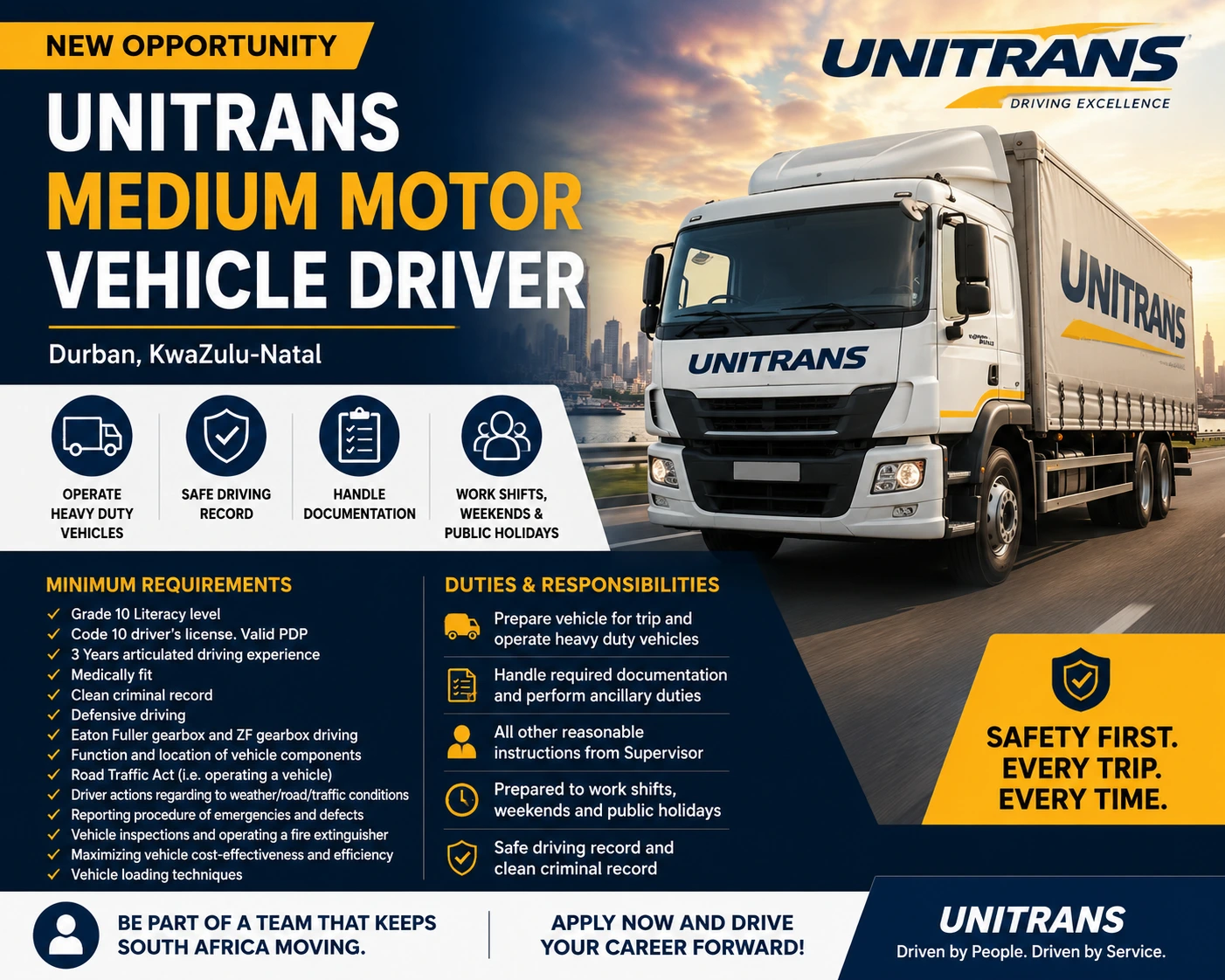
Learn everything about the Unitrans Medium Motor Vehicle Driver opportunity in Durban, including Code 10 requirements, PDP rules, defensive driving skills, duties, and career insights.
Driving jobs remain one of the most important employment opportunities in South Africa’s transport and logistics sector. Companies across the country depend on experienced drivers to move goods safely, keep supply chains running, and support daily operations. One of the latest opportunities attracting attention is the Unitrans Medium Motor Vehicle Driver position in Durban, KwaZulu-Natal.
For many job seekers, especially experienced Code 10 drivers, this opportunity offers more than temporary employment. It also highlights the skills, safety standards, and professional responsibilities expected in the modern transport industry.
Understanding what this role involves can help applicants prepare properly and improve their chances of securing similar driving positions in the future. Whether someone is already an experienced driver or planning a career in logistics, knowing the expectations behind a heavy-duty vehicle driving role is valuable.
What You Should Know First
The Unitrans Medium Motor Vehicle Driver opportunity is a temporary fixed-term driving position based in Durban. The role requires applicants to have a valid Code 10 driver’s license with a PDP, defensive driving knowledge, articulated vehicle experience, and understanding of road safety procedures.
The job focuses on:
- Operating heavy-duty vehicles safely
- Preparing vehicles before trips
- Managing transport documentation
- Following safety regulations
- Working shifts, weekends, and public holidays when required
Applicants also need a clean criminal record, medical fitness, and at least three years of articulated driving experience.
Understanding the Unitrans Medium Motor Vehicle Driver Role
The transport and distribution industry depends heavily on reliability. A medium motor vehicle driver is not simply someone who drives from one point to another. Modern logistics companies expect drivers to manage safety, efficiency, vehicle condition, and legal compliance at the same time.
The Unitrans Medium Motor Vehicle Driver role is designed for drivers who can handle demanding transport responsibilities professionally.
Why This Driver Position Matters
South Africa’s logistics network supports supermarkets, manufacturers, warehouses, retailers, and agricultural businesses. Drivers form the backbone of this system.
Without experienced drivers:
- Deliveries become delayed
- Supply chains slow down
- Businesses lose productivity
- Transport risks increase
This is why companies like Unitrans place strong emphasis on safe driving records, defensive driving skills, and operational discipline.
The Main Responsibilities Explained
The job description may appear simple at first glance, but each responsibility involves important practical skills.
Preparing the Vehicle Before a Trip
Before starting any route, drivers are expected to inspect the vehicle thoroughly.
This includes checking:
- Tyre condition
- Brakes
- Lights
- Mirrors
- Fluid levels
- Fuel
- Trailer connections
- Fire extinguisher readiness
A proper pre-trip inspection helps reduce breakdowns and road accidents.
For example, a driver transporting goods across KwaZulu-Natal may travel long distances in changing weather conditions. Identifying mechanical issues early can prevent dangerous situations later on the road.
Operating Heavy-Duty Vehicles Safely
One of the biggest responsibilities is safe vehicle operation.
This involves:
- Following road regulations
- Managing vehicle speed
- Maintaining safe following distances
- Handling heavy loads correctly
- Adapting to weather and traffic conditions
Heavy-duty vehicles react differently compared to ordinary passenger vehicles. Braking distances are longer, turning requires more space, and poor load balancing can become hazardous.
Drivers are expected to understand these risks thoroughly.
Managing Documentation
Transport operations involve paperwork and compliance procedures.
Drivers may need to manage:
- Delivery notes
- Route documentation
- Inspection reports
- Incident reports
- Fuel records
Accurate documentation protects both the driver and employer if disputes or emergencies occur.
For instance, if goods arrive damaged, delivery records help identify where the issue happened.
Why Defensive Driving Is Important
One of the most important requirements mentioned in the opportunity is defensive driving.
What Is Defensive Driving?
Defensive driving means operating a vehicle in a way that reduces risk, even when other road users make mistakes.
It includes:
- Anticipating hazards early
- Staying alert continuously
- Avoiding aggressive driving
- Managing blind spots
- Maintaining safe stopping distances
South African roads can present unpredictable conditions, especially for long-distance or heavy-duty drivers.
A defensive driver understands that safety depends not only on their own actions but also on preparing for the mistakes of others.
Example of Defensive Driving in Real Situations
Imagine driving a loaded truck during heavy rain in Durban traffic.
A defensive driver would:
- Reduce speed
- Increase following distance
- Avoid sudden braking
- Watch for hydroplaning risks
- Monitor nearby vehicles carefully
These actions reduce accident risk significantly.
The Importance of a Valid PDP
The opportunity specifically requires a valid PDP.
What Is a PDP?
A Professional Driving Permit (PDP) is required in South Africa for drivers transporting goods or passengers for commercial purposes.
A PDP confirms that the driver:
- Meets legal driving requirements
- Has no disqualifying criminal history
- Is medically fit to drive professionally
Without a valid PDP, drivers cannot legally perform many commercial transport duties.
Understanding Articulated Driving Experience
The role requires at least three years of articulated driving experience.
What Does Articulated Driving Mean?
Articulated vehicles are trucks with separate trailer sections connected by a pivot joint.
These vehicles require advanced driving skills because:
- Turning angles are wider
- Reversing is more difficult
- Load movement affects stability
- Braking distances increase
Experienced articulated drivers are highly valued in logistics because they can operate complex vehicles safely and efficiently.
Gearbox Knowledge: Eaton Fuller and ZF Systems
The job advert specifically mentions:
- Eaton Fuller gearbox driving
- ZF gearbox driving
Why Gearbox Knowledge Matters
Heavy-duty trucks often use advanced manual transmission systems.
Drivers who understand these systems can:
- Improve fuel efficiency
- Reduce vehicle wear
- Handle steep terrain better
- Drive more smoothly under heavy loads
Incorrect gearbox use can damage expensive vehicle components and increase maintenance costs.
Working Conditions Drivers Should Expect
Transport roles are demanding, and applicants should understand the working environment clearly.
Shift Work and Weekend Availability
The opportunity states that drivers must be prepared to work:
- Shifts
- Weekends
- Public holidays
Logistics operations often run continuously because businesses depend on constant delivery schedules.
Drivers may sometimes work early mornings, overnight shifts, or extended hours during busy periods.
Physical and Mental Demands
Professional driving can be physically and mentally exhausting.
Drivers need to:
- Stay focused for long periods
- Handle traffic pressure
- Load or inspect cargo
- Adapt to changing road conditions
This explains why medical fitness is part of the minimum requirements.
Skills That Can Improve an Applicant’s Chances
Even when applicants meet the minimum requirements, additional professional habits can make a major difference.
Strong Communication Skills
Drivers regularly interact with:
- Supervisors
- Warehouse staff
- Clients
- Security personnel
Clear communication helps avoid delivery mistakes and operational delays.
Reliability and Time Management
Late deliveries can disrupt entire supply chains.
Reliable drivers who manage routes effectively are often highly respected within logistics companies.
Attention to Detail
Small mistakes in transport operations can become serious problems.
For example:
- Incorrect load securing
- Missing paperwork
- Ignoring warning lights
- Failing inspections
Attention to detail improves safety and operational efficiency.
Common Misunderstandings About Unitrans Medium Motor Vehicle Driver Roles
Many people misunderstand what professional driving jobs actually involve.
“It’s Just About Driving”
This is one of the biggest misconceptions.
Professional drivers are also responsible for:
- Vehicle safety
- Compliance
- Documentation
- Customer interaction
- Risk management
The role requires discipline and professionalism far beyond basic driving ability.
“Any Code 10 License Holder Can Do the Job”
Having a license alone is usually not enough.
Most logistics companies look for:
- Practical experience
- Defensive driving skills
- Mechanical awareness
- Clean safety records
Experience with articulated vehicles is especially important.
“Temporary Jobs Are Not Valuable”
Temporary fixed-term roles can still provide:
- Industry experience
- Professional references
- Networking opportunities
- Future permanent opportunities
Many drivers build long-term careers through temporary contracts.
How the Logistics Industry Continues to Grow
The transport and logistics sector remains one of South Africa’s most important economic industries.
Growth in:
- Retail distribution
- E-commerce
- Warehousing
- Food transportation
continues to increase demand for skilled drivers.
Experienced Code 10 drivers with clean records and professional work habits are often in demand across multiple sectors.
Why Safe Driving Records Matter So Much
The advert highlights the need for a safe driving record.
What Employers Look For
Companies want drivers who:
- Avoid accidents
- Follow regulations
- Protect company vehicles
- Reduce insurance risks
A strong driving history often improves employability significantly.
Career Growth Opportunities for Drivers
Many professional drivers eventually move into higher-level logistics roles.
Possible career paths include:
- Fleet supervisor
- Transport coordinator
- Operations assistant
- Driver trainer
- Long-haul specialist driver
Experience in reputable logistics environments can open future opportunities.
Where to Apply
APPLY HERE: Unitrans Medium Motor Vehicle Driver
SEE ALSO: Fedics Driver Job Opportunity in Tokai 2026: Requirements, Duties and Application Insights