


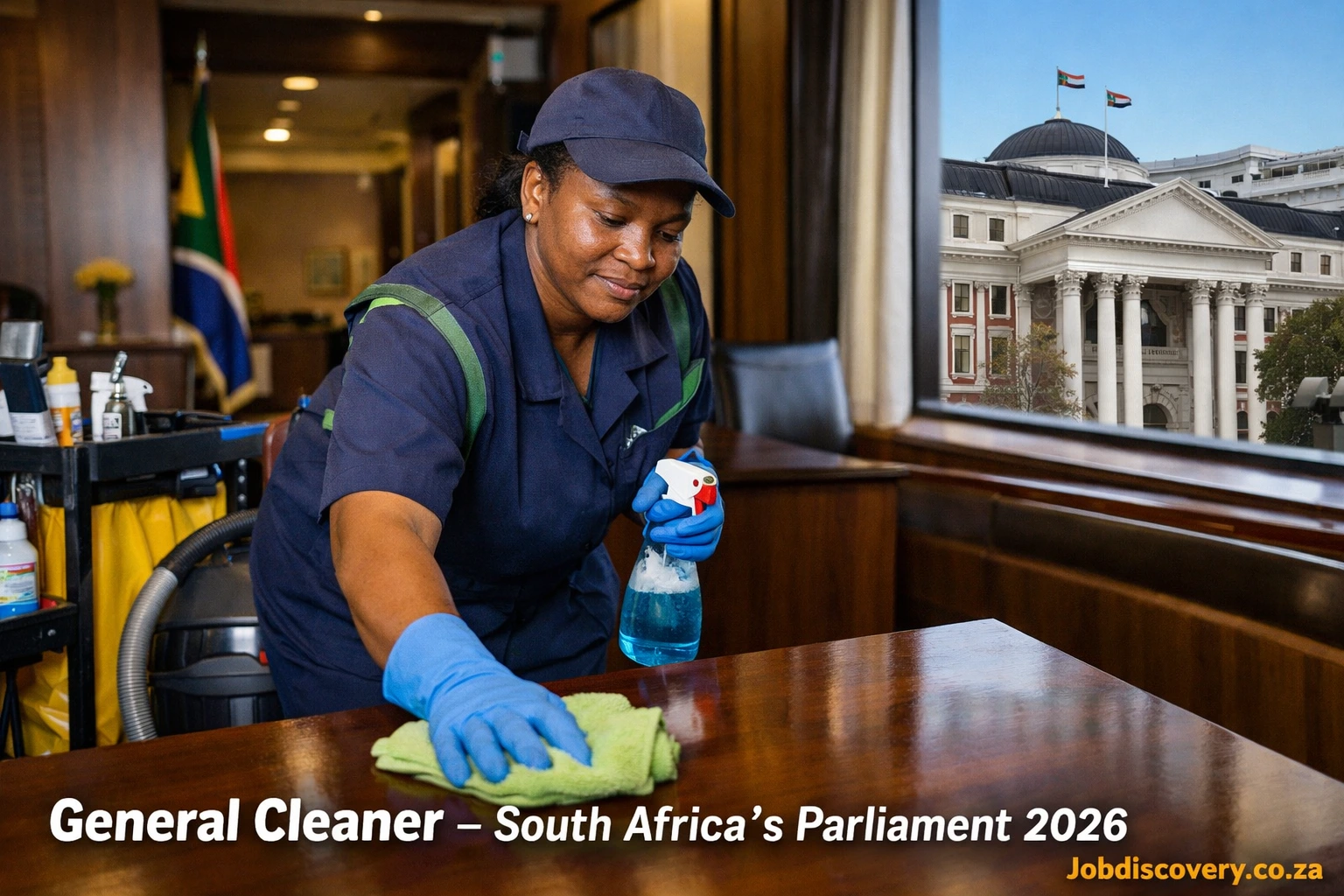
Parliament Is Hiring General Cleaners in 2026. Here’s who qualifies, what the job involves, and why this opportunity matters right now.
Stable work is becoming harder to find, especially for people without formal tertiary qualifications. That’s why the Parliament of the Republic of South Africa opening seven General Cleaner positions for 2026 is drawing attention.
This opportunity is aimed at people with basic schooling and cleaning experience who are looking for reliable employment in the public sector. With the closing date set for 06 February 2026, this is a time-sensitive chance for those who meet the requirements and want long-term security rather than short contracts or piece jobs.
In a country where many essential workers remain invisible, these roles matter more than most people realise.
Why Parliament Is Hiring General Cleaners in 2026 cleaning jobs at Parliament are different
Cleaning roles exist everywhere — but working at Parliament is not the same as cleaning a mall, office block, or private residence.
Parliament is the heart of South Africa’s democracy. It is where laws are debated, accountability is enforced, and national decisions are made. Keeping this space clean, safe, and functional is not just routine work — it directly supports the functioning of the country’s legislative system.
General Cleaners in the Household Services Section under Institutional Support Services (ISSD) are responsible for maintaining both public and occupied spaces across the parliamentary precinct. This includes offices, shared areas, and high-traffic public zones that must meet strict hygiene and safety standards.
It’s work that requires discipline, consistency, and respect for rules — not just physical effort. Parliament Is Hiring General Cleaners in 2026
What the Parliament Is Hiring General Cleaners in 2026 job actually involves day to day
Unlike vague job ads, this role is very specific about expectations.
Successful candidates will be responsible for:
- Cleaning occupant spaces, including offices and work areas
- Maintaining public spaces and common areas
- Following health and safety standards at all times
- Using industrial cleaning equipment such as vacuum cleaners and carpet machines
- Working according to schedules and instructions, sometimes under pressure
Flexibility is important. Parliament operates on tight schedules, and cleaners may be required to work shifts or flexible hours, especially during busy parliamentary periods.
This is not casual labour. It is structured, monitored work with accountability.
Who qualifies — and who should realistically apply
The minimum requirement is Grade 10, which makes this role accessible to many South Africans who are often excluded from formal opportunities.
However, applicants should note the following:
- Grade 11 or an NQF Level 3 qualification is an advantage
- At least 2 years of relevant cleaning experience is required
- You must be able to read, write, and follow instructions
- Knowledge of occupational health and safety is important
- Experience using industrial cleaning machines strengthens your application
Security clearance and qualification verification are mandatory. This means applicants should be honest and prepared — Parliament does not compromise on integrity.
If you lack experience or struggle with written instructions, this may not be the right role. That honesty helps avoid wasted applications.
What working at Parliament offers beyond a payslip
Parliament promotes itself as an employer that values growth, dignity, and inclusion, even for roles that are often overlooked.
Employees have access to:
- A competitive total cost-to-company package
- Learning and development opportunities, including bursaries
- A structured performance management system
- Wellness programmes and sporting activities
- A work culture focused on respect, accountability, and teamwork
While cleaners will not work remotely, they are still part of an institution that recognises work-life balance and employee well-being.
In an economy dominated by short-term contracts, this level of stability is significant.
How to apply — and common mistakes to avoid
Applications are only accepted through Parliament’s i-Recruitment platform. Email, hand-delivered, or WhatsApp applications will not be considered.
Applicants must apply under the correct category:
- External Applicant: Never worked for Parliament
- Ex-Employee: Previously employed, including former interns
- APPLY HERE
Incomplete applications are automatically rejected. Missing documents, incorrect information, or last-minute submissions are common reasons people lose out.
If you do not receive feedback within two months after the closing date, your application should be considered unsuccessful.
Parliament also reserves the right not to make an appointment, even if posts are advertised.
ALSO APPLY FOR: Unlock Your Potential: The Setaco 2026 Learnership Programme
Why this opportunity deserves attention right now
Cleaning work is often undervalued, yet institutions like Parliament cannot function without it. These roles offer something rare in today’s job market: structure, dignity, and stability.
For people with experience who are tired of temporary work or unreliable employers, this could be a meaningful step forward — not glamorous, but solid and respected.
Sometimes, the most important jobs are the ones that quietly keep everything else working.
Frequently Asked Questions
Do I need a matric certificate to apply?
No. The minimum requirement is Grade 10, though Grade 11 is an advantage.
Is this a permanent position?
The advert does not explicitly state contract length, but Parliament roles are typically structured and not casual.
Can I apply without cleaning machine experience?
Experience with industrial equipment is strongly preferred and may affect your chances.
Is there an age limit?
No age limit is stated, as long as you meet the requirements.
Where do I apply?
Only through Parliament’s official i-Recruitment platform.

No responses yet