


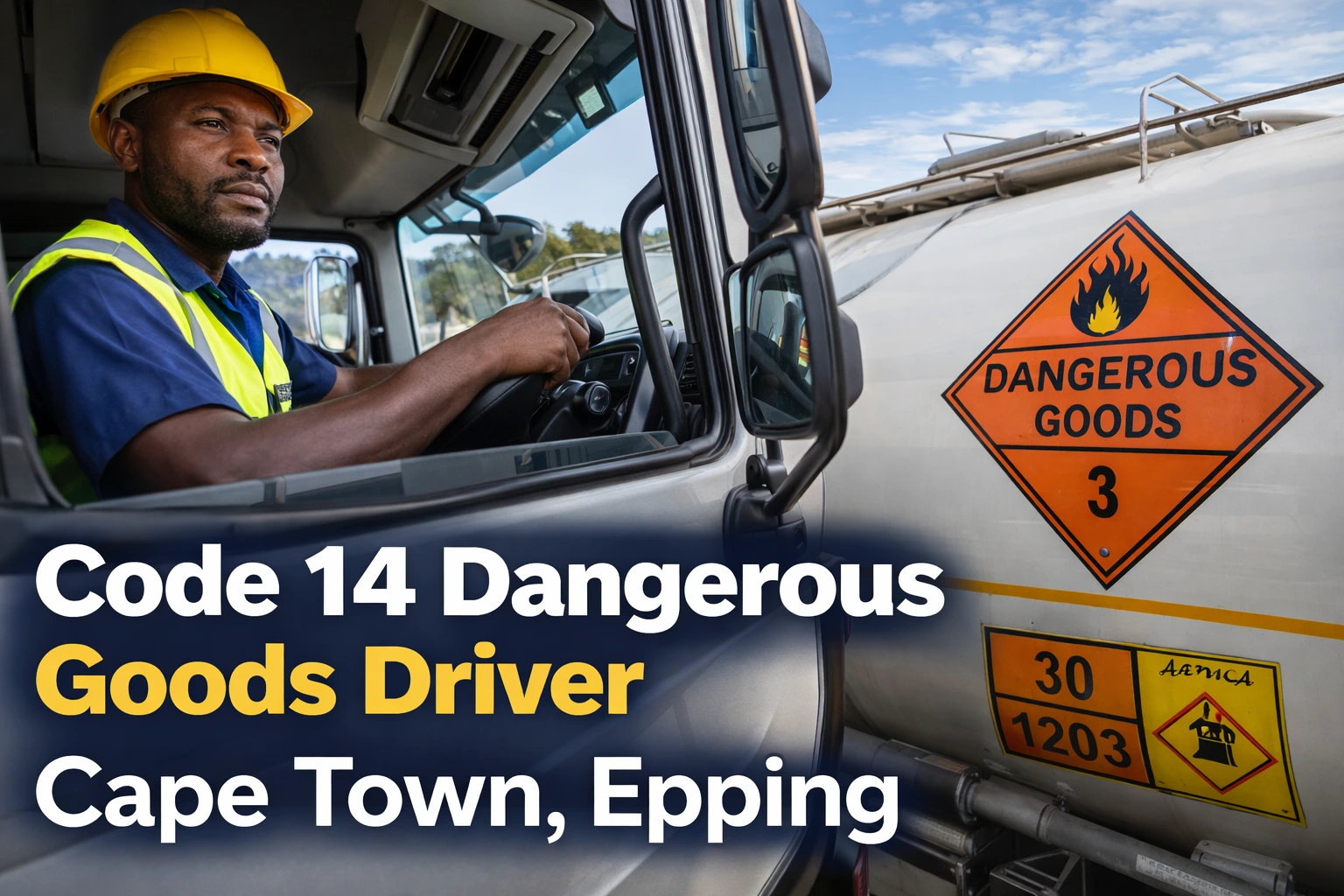
Code 14 Dangerous Goods Driver- Cape Town, Epping role explained. Requirements, duties, risks, and application tips for qualified drivers.
The Code 14 Dangerous Goods Driver- Cape Town, Epping role is not a standard trucking job. It’s designed for experienced drivers who are trusted to handle hazardous materials under strict safety regulations.
If you already hold a Code 14 licence with a Dangerous Goods endorsement, this type of role can open doors in industries like manufacturing, logistics, and chemical transport. However, the expectations are significantly higher than normal delivery work.
Within the first few moments of reviewing this opportunity, three things stand out:
- It requires proven experience, not entry-level driving
- Safety compliance is a core responsibility, not optional
- The role demands independence and decision-making under pressure
Before applying, it’s essential to understand exactly what the job involves—and whether your current experience matches what employers are really looking for.
What this programme is (plain English)
This is a contract-based driving role focused on transporting dangerous or hazardous goods. These could include chemicals, flammable materials, or other regulated substances.
Unlike general freight driving, dangerous goods transport is governed by strict safety laws and procedures. Employers are legally required to hire drivers who are properly trained and certified.
In simple terms:
You’re not just moving goods—you’re responsible for public safety, environmental protection, and legal compliance while on the road.
What you’ll actually do (real-world breakdown)
The job description outlines responsibilities, but here’s how they translate into daily work:
1. Transporting hazardous materials safely
You’ll be driving heavy vehicles carrying dangerous goods, which means:
- Following strict routes and handling protocols
- Avoiding risky driving behaviour at all times
- Staying alert to environmental risks (heat, traffic, road conditions)
2. Vehicle inspections
Before and after trips, you’ll:
- Check tyres, brakes, lights, and load security
- Confirm safety equipment is present and working
- Identify any mechanical issues early
Skipping inspections is not an option in this role.
3. Documentation and compliance
You’ll be responsible for:
- Completing delivery notes and safety documents
- Ensuring cargo is correctly labelled and recorded
- Keeping accurate logs for legal compliance
Mistakes here can lead to serious consequences.
4. Route management and communication
While routes may be planned, you’ll need to:
- Adjust for delays or road conditions
- Communicate with dispatch and clients
- Keep stakeholders updated on deliveries
5. Monitoring vehicle condition
You’re expected to:
- Report faults immediately
- Prevent breakdown risks
- Maintain overall vehicle safety
Who qualifies (minimum requirements checklist)
To be considered, applicants must have:
- A valid Code 14 driver’s licence
- A Dangerous Goods endorsement
- Proven experience as a dangerous goods driver
- A clean driving record (no major violations or accidents in the past five years)
- Strong knowledge of safety regulations for hazardous materials
- Ability to work independently and make quick decisions
- Good communication skills
- Physical fitness for long driving hours
- Flexibility to work weekends, holidays, or irregular shifts
Why applicants get disqualified
Even experienced drivers can be rejected. Common reasons include:
- No Dangerous Goods endorsement on licence
- Poor driving record (accidents or violations)
- Lack of verifiable experience in hazardous transport
- Incomplete or unclear documentation
- Failure to demonstrate knowledge of safety procedures
- Inability to handle irregular working hours
Employers in this space prioritise risk reduction, so even small concerns can affect your chances.
✅ Who should apply
This role is best suited for:
- Drivers with real-world dangerous goods experience, not just certification
- Individuals who are detail-oriented and disciplined
- Candidates comfortable working long, irregular hours
- Drivers who can remain calm in high-risk or emergency situations
If you’ve been working in general freight and recently obtained a Dangerous Goods endorsement, you may still need more hands-on experience to compete effectively.
Competition level: ✅ Medium to High
The competition depends heavily on experience level.
- Fewer drivers have Dangerous Goods certification → lowers competition slightly
- However, employers prefer experienced candidates only → raises competition
Overall, expect moderate to high competition, especially from drivers with years of hazardous transport experience.
✅ Tips to improve your selection chances
- Highlight Dangerous Goods experience clearly
Mention specific materials or industries you’ve worked in. - Show your safety record
A clean driving history is a major advantage. - List certifications properly
Include licence codes and endorsements clearly. - Demonstrate responsibility
Mention inspection routines, compliance checks, and reporting experience. - Keep your CV practical
Focus on what you’ve done, not just job titles.
✅ Common mistakes applicants make
- Applying without a Dangerous Goods endorsement
- Listing driving experience without specifying hazardous materials
- Submitting a CV with no proof of compliance knowledge
- Ignoring the importance of driving record history
- Underestimating the physical and time demands of the role
✅ Application strategy (step-by-step)
- Confirm your qualifications
Ensure your licence and Dangerous Goods certification are valid. - Prepare a focused CV
Emphasise:- Hazardous goods experience
- Safety compliance
- Driving record
- Search for the listing
Look for the exact title:
“Code 14 Dangerous Goods Driver- Cape Town, Epping” - Apply through the official employer or recruiter platform
Avoid sending applications through unverified channels. - Track your application
Keep records of where and when you applied.
ALSO APPLY FOR: Drivers 9001 – 16000 kg BUCO Burgersfort Job 2026 (Permanent Position)
Documents checklist
Based on the advert and standard hiring practices:
- Updated CV
- Copy of Code 14 driver’s licence
- Dangerous Goods certification
- Driving record (if available)
- Proof of experience
Note: Some documents are not explicitly listed in the advert. Verify requirements through the official recruiter or employer platform before submitting.
Where to apply
To apply safely:
- Search for the job title on trusted job platforms
- Look for the listing posted by the employer or recruiter
- Confirm the details match the original advert
APPLY HERE: Code 14 Dangerous Goods Driver
Avoid unofficial links that request upfront payments or sensitive personal data.
Safety & Scam Check
Protect yourself when applying:
- Never pay fees to apply for a job
- Verify the employer or recruiter’s official website or platform
- Be cautious of WhatsApp-only job offers
- Confirm job details match the original advert
- Avoid sharing sensitive information before verification
Legitimate employers will follow standard recruitment processes.
Final assessment
The Code 14 Dangerous Goods Driver- Cape Town, Epping opportunity is a specialised role with real responsibility and risk. It’s not suited for beginners, but for experienced drivers, it can be a valuable step within the logistics and manufacturing sectors.
What stands out is the employer’s focus on safety, compliance, and reliability. If you meet those expectations—and can prove it—you’ll be in a strong position.
For applicants, the key takeaway is simple:
This is less about applying quickly and more about applying correctly and credibly

No responses yet